Repo ↗ · Source README ↗ · Markdown & license bundle
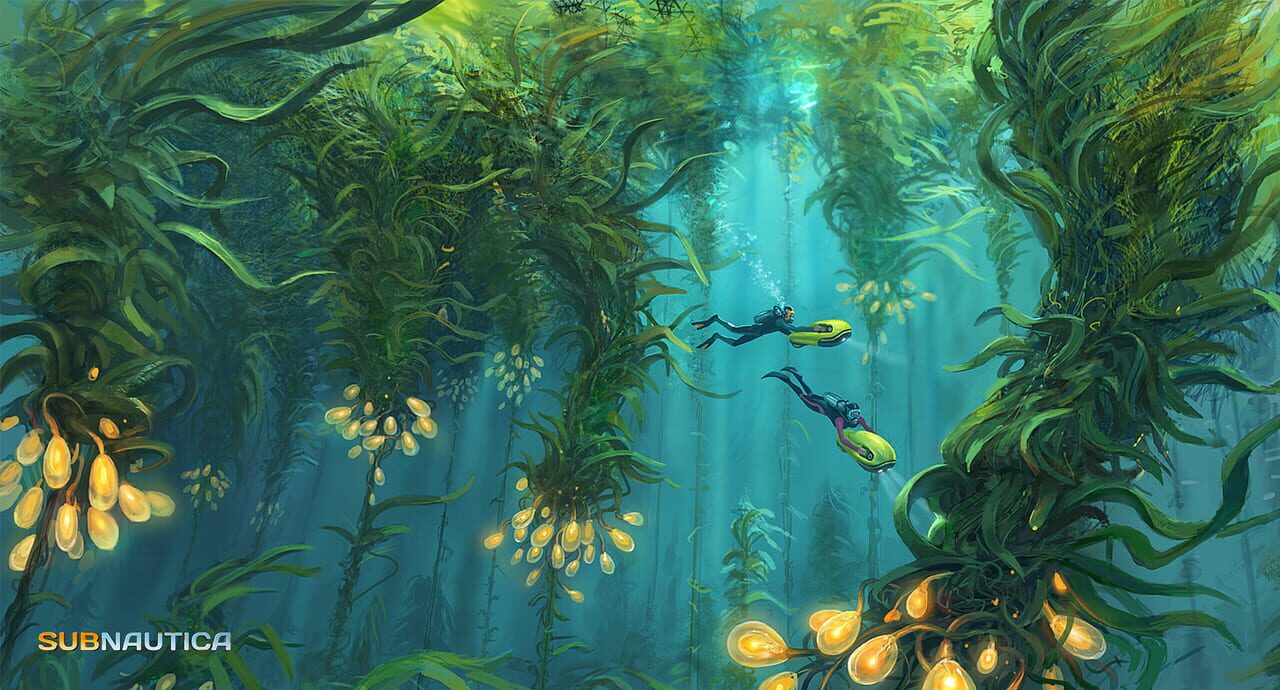
Image reference (original game): Subnautica · original-game artwork, provided by IGDB. Image rights remain with their respective owners. This illustrates the referenced original game, not the actual visuals of this rewrite or mod.
Source maintainer: kuba001-pl · Revision: 55f16714753c · Catalogued: 2026-10-12
Source license: MIT · LICENSE-APACHE · LICENSE-MIT · Article: Source README (format adapted)
The source README follows, with formatting adapted for this site and images replaced by source links. Feature, completion and testing claims belong to its authors and have not been independently playtested here. The Traditional Chinese translation was prepared with AI assistance.

subnautica-rs
An unofficial, from-scratch Rust reimplementation of the Subnautica engine for
desktop. It reads data from your own installed copy of Subnautica at
runtime. This repository contains no game files, and never will.
Unofficial fan project, not affiliated with or endorsed by Unknown Worlds or
Krafton. You need a legally owned copy of Subnautica. Developed with heavy
use of AI coding agents; seeAGENTS.mdfor the rules they follow.
Status: early (active development). The desktop client (sn-client) streams
terrain, materials, world objects, lighting, and player movement; gameplay
systems and multiplayer are in progress. Architecture and roadmap are in
docs/DESIGN.md, and file format findings in
docs/formats/.
What works
Tested on Windows 11 with game build 10 (Steam):
- Decoding all 5,416 terrain octree batch files (
.optoctrees, ~1.1 GB):
669,150 octrees, every one structurally validated, in under a second. - Spatial layout of the octree data (child order, octree order, +Y up),
confirmed from seam continuity. - Reading the world index (
index.txt): world, octree and batch dimensions. - Turning terrain into meshes (surface nets) and exporting them as OBJ for
Blender. Meshes of neighbouring batches join without holes. - Reading Unity’s containers: all 5,467 asset bundles and the player’s
.assetsfiles (423,677 objects), matching UnityPy’s listing exactly. - Decoding the game’s textures (matches UnityPy pixel for pixel on a 506-texture
sample) and finding every terrain material (233 types, 211 textures). - Reading where every world object is placed (
sn-inspect entities): all
4,581 placement files, 419,846 objects, each resolved to its prefab name
(prefabs.db), in about a second. - Loading prefabs through the Addressables catalog and decoding their meshes
(sn-inspect prefab, exported as OBJ toout/prefabs/): all 1,369 placed
prefabs and their 3,263 meshes, matching UnityPy on every vertex and
triangle count. - Reading the biome map and the water settings of all 145 biomes
(sn-inspect biomes,sn-inspect biomes --at X Y Z). - Reading gameplay data (headless, not used by the client yet): all 463
recipe/item entries ofBalance/TechData, the prefab → tech type map,
the player’s numbers (oxygen, health, swim and walk speeds) and the
starting blueprints and unlocks (PDAData) from the main scene
(sn-inspect techdata,sn-inspect player), and every collider of the
placed prefabs (sn-inspect prefab --colliders). - The player’s body: the suit models the game shows in a new game,
animated by the game’s controller with its empty-hand rules (walking,
swimming, surface, falling, death), turned and bobbed with the view as
the game does; the head casts a shadow but is not drawn in first
person; the camera sits at the game’s eye (sn-inspect player --body; insn-clientlook down to see it,--third-personfor a
debug camera behind the player). Its motion has not been compared
with the game side by side. - Reading what the game keeps only in its code, from the player’s own
Assembly-CSharp.dllwith our own .NET reader (sn-inspect code): all
793 tech type names, the 7 crafting menus (159 nodes;--treesprints
them) and TechData’s defaults; every method body of the DLL decodes. - Collision (
sn-sim): the player’s capsule swept against the
full-resolution terrain and the placed objects’ colliders, one-sided as
the game’s.sn-inspect swimswims from the lifepod into the nearest
Kelp Forest along the seabed; for seeds 1–5 it arrives with 0
penetrations, at about 13–19 µs per step. - The player, with the game’s numbers: walking with gravity, steps and
slopes in the lifepod and on land; swimming with the game’s speeds,
drag and surface rules. The lifepod’s hatches play the game’s
cinematics: the hatch opens, the body climbs with the pod’s animation,
and the camera follows the game’s anchor (sn-inspect walk/dive
check the durations on seeds 1–5; insn-clientpress E at a hatch, or
--use-hatch SECONDS[,SECONDS…]to have it done,--hatch-nameto
pick which,--hold-forward SECONDSto walk on afterwards). After a death the camera
follows the head (--kill SECONDSto see it).sn-inspect walkruns
pod → water → pod headless with 0 penetrations. Insn-clientyou are the player (the fly camera is
--free-cam). Playing it with keyboard and mouse is not tested by the
agent. - Oxygen, suffocation, health, death and respawn in the lifepod, with
the game’s numbers (45 units, 1 / 1.5 / 2 per second by depth, refill
30 per second at the surface, 8 s to pass out).sn-inspect diveruns
a dive to the seabed until the player dies and respawns, then a dive cut
short by surfacing; seeds 1–5 pass. The mouse look uses the game’s rule,
default sensitivity and ±87° pitch limit.sn-clientshows a HUD of our
own: oxygen and health bars, depth, the black-out overlay. The HUD
layout and the look in play are not tested by the agent. sn-client: a desktop window (Bevy), first person or a fly camera. Terrain streams in
and out as you move, with four levels of detail out to 1.2 km, textured
with the game’s own terrain materials, blended between neighbouring
materials the way the game does it (layers per chunk, soft ragged borders,
cap/side transitions by slope), with the world’s placed objects (coral,
plants, rocks, wrecks; about 15,000 around the lifepod) streamed in with
it, plus what the game’s spawn slots fill with when a new world starts
(resource outcrops, eggs, fragments; picked with a fixed seed,
--slot-seed), and the grass the terrain grows within ~100 m (sea grass,
the Grassy Plateaus’ red seaweed, small corals; the game’s placement
rules and grass shader: tints, height gradient, waving), and the scenes
the game spawns at start: the Aurora (intact as in a new game, swapped
for the wreck on the game clock with the game’s countdown rule,
--aurora-countdown,--time-scale, or held with--aurora intact | exploded) and the Precursor bases and Lost River trees its
scene holds, and Lifepod 5 at a start point drawn the game’s way (from its
map of valid starts; seeded,--lifepod-seed, or--lifepod X Z) with
its fabricator, radio, medical cabinet and power cells; the camera starts
where the player does; seen through the game’s own water fog model (colours and distances
per biome) under the game’s sun and sky light following the session clock
(--timesets the start;--time-scale 0freezes it), with the game’s water surface (simulated or baked waves, foam,
reflection, refraction, sun glint; from above and below) under the
game’s sky (scattering, sun, clouds, planet, moon; day to night), lit
the way the game lights surfaces (caustics, sunlight dimmed under water,
the game’s ambient; SIG coral/rocks with their specular and glow channels,
capped rocks with separate top/side textures and normal maps; objects with their specular maps, glow maps with day
and night strengths, and each biome’s ambient settings; renderers on layers the game’s camera
skips, e.g. the alien bases’ occluder shells, left out; the point, spot and
directional lights placed objects carry, e.g. glowing coral, without their
shadows; the fake light glows on ion crystal pedestals and under Precursor
lights with the game’s decoded shader and its transparency compositing,
coloured by their lights as the game’s script does; the Precursor consoles’
holograms and the cache doors’ force fields with the game’s decoded effect
shader (scrolling textures, soft edges, deformation, refraction); the
objects the game spawns from prefabs’ placeholders, e.g. the cache doors,
key terminals and pedestal crystals; none of these compared with the game
on screen yet); the game’s animators on objects (M7f4: its own
controllers, transitions and layers run every frame; animated Transforms
move, skinned meshes bend on the GPU, blend shapes follow their animated
weights; e.g. Lifepod 5’s hull, eggs, Precursor terminals, the waving
brain corals and jewelled disks; not compared with the game on screen
yet); objects and scenes switch between their levels of detail by
distance with the game’sLODGroups, its High qualitylodBiasand its
60° field of view (--no-lod,--fov; Unity’s documented rule, not
compared with the game on screen yet); Lifepod 5’s own light: its sky
lights the pod (and, while you are inside, everything without a sky of its
own) and its lighting states set the sky and the red-alert lamps
(--lifepod-state, default damaged as after the intro; not compared with
the game on screen yet). Flying from the lifepod
to the crater edge
keeps memory under 1.6 GiB, at about 220 fps on average on an RTX 3080
(about 100 fps in the dense start area).
What doesn’t work yet
The water clip map (no water inside the lifepod and bases,
shore foam); water settings per pixel (the
camera’s are used everywhere); Lifepod 5 floating on the waves, its
intro, and its modules’ emission by power state;
the Aurora’s explosion effects, sounds and warnings, fire and smoke;
the player’s saved detail level and field-of-view options (High and 60°
assumed); terrain grass
beyond ~100 m, and grass tufts in the game’s exact spots (the amount and
spread follow its rules; our own random numbers); for world objects: reflections of the biome
sky’s cube map, cave/interior skies chosen by atmosphere volumes,
animated lights, materials and script values, remaining unsupported object
shaders (Lost River brine, sand and lava falls and other effect
meshes not yet decoded are flat; matched original-game SIG rock/coral comparisons are not tested;
docs/formats/materials.md), creatures (including the
~100,000 the spawn slots would add); the intro cinematic, tools, the PDA and IK, tanks and fins changing
speeds, the game’s own HUD and damage effects; audio,
multiplayer (so far the headless sn-server and bot players, also with
the player’s own rules and collision, over UDP on one machine; the game
client runs its own in-process server even in solo play, and can host
(--host) or join (--join) a game: other players’ bodies, animations,
hatch cinematics, deaths and respawns are synced; tested with two
clients on one machine, not yet over the internet; no encryption, for
friends on trust).
Linux/macOS: not tested.
Try it
You need Rust (stable) and, on Windows, Visual Studio with the C++ tools and
the Windows SDK.
# Point at the folder that contains Subnautica.exe
export SUBNAUTICA_DIR="D:/SteamLibrary/steamapps/common/Subnautica"   # PowerShell: $env:SUBNAUTICA_DIR = "..."

cargo run -p sn-inspect -- index            # world dimensions
cargo run -p sn-inspect -- octree 12 18 12  # statistics for one terrain batch
cargo run -p sn-inspect -- octree --all     # decode and validate every batch
cargo run -p sn-inspect -- orient 7 17 10   # show how octree data maps onto space
cargo run -p sn-inspect -- mesh 12 18 12 --radius 1   # Safe Shallows → out/*.obj
cargo run -p sn-inspect -- mesh 12 18 12 --radius 1 --lod 2   # coarser level of detail
cargo run -p sn-inspect -- voxel 0 -10 0    # what's at a world position, surfaces below
cargo run -p sn-inspect -- unity --types resources.assets   # what's inside a Unity file
cargo run -p sn-inspect -- unity --all      # parse every Unity file of the game
cargo run -p sn-inspect -- textures --census          # texture formats in the game
cargo run -p sn-inspect -- terrain-materials          # terrain type → material → textures

cargo run -p sn-client                      # fly around, starting in the lifepod
cargo run -p sn-client -- --view 2000       # see further
cargo run -p sn-client -- --flythrough 1700 -80 0   # automated test flight to the crater edge

# Multiplayer (experimental, M10): play together, see "Play together" below.
cargo run --release -p sn-client -- --host                   # host on UDP 27420
cargo run --release -p sn-client -- --join 192.168.1.20 --name Ann   # join it
cargo run --release -p sn-server -- --port 27420             # or a headless server
cargo run --release -p sn-inspect -- bots 127.0.0.1:27420 --count 8 --seconds 60
cargo run --release -p sn-inspect -- coop 127.0.0.1:27420   # bots with the player's rules, lan/internet/bad

cargo test --workspace                      # tests that don't need the game
cargo test -p sn-octree -- --ignored        # full-world test (needs SUBNAUTICA_DIR)
sn-inspect only reads the game folder; it never writes to it. Exports go to
out/, which is gitignored. They are derived from your game files: don’t
share them.
Visual performance baselines
For a fixed-camera benchmark with saved settings and numerical scene counts,
use a new baseline name and an explicit source revision/build label:
# SUBNAUTICA_DIR must point to your install. Choose a new name for each run.
cargo run --release -p sn-client -- --benchmark 300 --baseline shallows-review-1 --baseline-revision working-tree --warmup 120 --resolution 1600 900 --start 0 -10 0 --look 60 -40 60 --fov 60 --view 1200 --lifepod-seed 1 --slot-seed 1 --time 9.6 --time-scale 0 --aurora intact --water-quality high --color-grading off --gpu-timings
This saves report.txt, frames.csv and capture.png under
out/baselines/run-shallows-review-1/. An existing name is rejected. Replace
working-tree with your revision and change label to identify the build.
Names/labels accept letters, digits, - and _. Named baselines require a
solo benchmark; they default to 120 consecutive settled warm-up frames.
--resolution specifies physical pixels. Frame timings use real, unclamped
time; the report includes median/p95/p99, scene counts, camera, fog, sky, water
time and recent GPU diagnostic averages.
Three 300-frame runs at these settings matched the static scene counts and
1600 × 900 capture size. Median frame times were 17.69–17.86 ms on the RTX 3080
(above the 16.7 ms target). Animation, waves and foam history remain live:
--time-scale 0 freezes the game clock, not those effects. These reports
are performance baselines, not proof of pixel-identical captures or a match
to the original game. Original-game visual comparison: not tested.
Play together (experimental)
Each player needs their own installed copy of Subnautica, the same game
build, and this project built from the same version (the join is refused
otherwise, with the reason). Nothing from the game is sent over the
network: only positions, animation values, events and checks.
- Host:
sn-client --host(or--host PORT; default UDP 27420).
The host’s flags decide the world (--lifepod-seed,--slot-seed,
--time,--aurora…). A headlesssn-serverworks too. - Join:
sn-client --join ADDRESS[:PORT] --name NAME. The host’s
world replaces your world flags. - Over the internet: the host forwards UDP port 27420 on their
router to their PC (or both are on one LAN or a VPN). There is no
relay or NAT punching: it would need a third-party service. - Synced: each player’s position, look, swimming and walking
animations, the lifepod hatch cinematics (doors and climbing: logged, not yet checked by eye), deaths
and respawns, the game clock and the Aurora. Not yet: items,
inventory, crafting, saves, creatures, chat, players colliding. - Trust: no encryption and no password in the client yet: for
friends, not public servers. - Tested: two clients on one machine (also with simulated latency
and loss). Not tested: two machines over the internet.
Layout
| Path | What |
|---|---|
crates/sn-octree |
Reader/writer for terrain octrees (pure, no dependencies) |
crates/sn-world |
World layout: index.txt, batch addressing |
crates/sn-mesh |
Surface nets mesher and mesh topology checks (pure, no dependencies) |
crates/sn-terrain |
Terrain batches → meshing fields → meshes (pure) |
crates/sn-unity |
Unity containers: UnityFS bundles, serialized files (pure) |
crates/sn-assets |
Finds Unity objects across bundles; terrain materials |
crates/sn-install |
Finds the game folder and reads its files (read-only) |
crates/sn-protocol |
Multiplayer messages and their binary codec (pure, no dependencies) |
crates/sn-net |
Multiplayer transport over UDP: connections, reliable and latest-only channels; a simulated network for tests |
crates/sn-session |
Multiplayer logic without sockets: the server (join, clock, event order, checks), the client (clock sync, drawing other players) and the shared world state |
apps/sn-inspect |
Command-line inspector and validator |
apps/sn-client |
The desktop client (Bevy) |
apps/sn-server |
Headless multiplayer server (experimental): reads the host’s install, listens on UDP |
docs/ |
Design, roadmap, file format notes |
Client controls
Hold the right mouse button (or press M) to look around. WASD moves, Q/E go
down/up, Shift is fast, and the mouse wheel changes speed.
Licence
Our code is dual-licensed under MIT or
Apache-2.0, at your option. Subnautica and its assets
belong to their owners and are not part of this project.
Credits
Projects we learn from (reading, not copying): Nitrox,
Subnautica-TerrainPatcher, UnityPy, AssetStudio, OpenMW, hl2-rs, benilla,
gang-beasts-rust, and the AI Game Modding Guides.
License and provenance
The README and its translation retain MIT terms. Changes comprise translation, links and formatting. Editable Markdown, the original README, LICENSE and NOTICE files are included in the linked bundle. This grants no rights to the original games, their assets or trademarks.
LICENSE-APACHE
Apache License
                           Version 2.0, January 2004
                        http://www.apache.org/licenses/

   TERMS AND CONDITIONS FOR USE, REPRODUCTION, AND DISTRIBUTION

   1. Definitions.

      "License" shall mean the terms and conditions for use, reproduction,
      and distribution as defined by Sections 1 through 9 of this document.

      "Licensor" shall mean the copyright owner or entity authorized by
      the copyright owner that is granting the License.

      "Legal Entity" shall mean the union of the acting entity and all
      other entities that control, are controlled by, or are under common
      control with that entity. For the purposes of this definition,
      "control" means (i) the power, direct or indirect, to cause the
      direction or management of such entity, whether by contract or
      otherwise, or (ii) ownership of fifty percent (50%) or more of the
      outstanding shares, or (iii) beneficial ownership of such entity.

      "You" (or "Your") shall mean an individual or Legal Entity
      exercising permissions granted by this License.

      "Source" form shall mean the preferred form for making modifications,
      including but not limited to software source code, documentation
      source, and configuration files.

      "Object" form shall mean any form resulting from mechanical
      transformation or translation of a Source form, including but
      not limited to compiled object code, generated documentation,
      and conversions to other media types.

      "Work" shall mean the work of authorship, whether in Source or
      Object form, made available under the License, as indicated by a
      copyright notice that is included in or attached to the work
      (an example is provided in the Appendix below).

      "Derivative Works" shall mean any work, whether in Source or Object
      form, that is based on (or derived from) the Work and for which the
      editorial revisions, annotations, elaborations, or other modifications
      represent, as a whole, an original work of authorship. For the purposes
      of this License, Derivative Works shall not include works that remain
      separable from, or merely link (or bind by name) to the interfaces of,
      the Work and Derivative Works thereof.

      "Contribution" shall mean any work of authorship, including
      the original version of the Work and any modifications or additions
      to that Work or Derivative Works thereof, that is intentionally
      submitted to Licensor for inclusion in the Work by the copyright owner
      or by an individual or Legal Entity authorized to submit on behalf of
      the copyright owner. For the purposes of this definition, "submitted"
      means any form of electronic, verbal, or written communication sent
      to the Licensor or its representatives, including but not limited to
      communication on electronic mailing lists, source code control systems,
      and issue tracking systems that are managed by, or on behalf of, the
      Licensor for the purpose of discussing and improving the Work, but
      excluding communication that is conspicuously marked or otherwise
      designated in writing by the copyright owner as "Not a Contribution."

      "Contributor" shall mean Licensor and any individual or Legal Entity
      on behalf of whom a Contribution has been received by Licensor and
      subsequently incorporated within the Work.

   2. Grant of Copyright License. Subject to the terms and conditions of
      this License, each Contributor hereby grants to You a perpetual,
      worldwide, non-exclusive, no-charge, royalty-free, irrevocable
      copyright license to reproduce, prepare Derivative Works of,
      publicly display, publicly perform, sublicense, and distribute the
      Work and such Derivative Works in Source or Object form.

   3. Grant of Patent License. Subject to the terms and conditions of
      this License, each Contributor hereby grants to You a perpetual,
      worldwide, non-exclusive, no-charge, royalty-free, irrevocable
      (except as stated in this section) patent license to make, have made,
      use, offer to sell, sell, import, and otherwise transfer the Work,
      where such license applies only to those patent claims licensable
      by such Contributor that are necessarily infringed by their
      Contribution(s) alone or by combination of their Contribution(s)
      with the Work to which such Contribution(s) was submitted. If You
      institute patent litigation against any entity (including a
      cross-claim or counterclaim in a lawsuit) alleging that the Work
      or a Contribution incorporated within the Work constitutes direct
      or contributory patent infringement, then any patent licenses
      granted to You under this License for that Work shall terminate
      as of the date such litigation is filed.

   4. Redistribution. You may reproduce and distribute copies of the
      Work or Derivative Works thereof in any medium, with or without
      modifications, and in Source or Object form, provided that You
      meet the following conditions:

      (a) You must give any other recipients of the Work or
          Derivative Works a copy of this License; and

      (b) You must cause any modified files to carry prominent notices
          stating that You changed the files; and

      (c) You must retain, in the Source form of any Derivative Works
          that You distribute, all copyright, patent, trademark, and
          attribution notices from the Source form of the Work,
          excluding those notices that do not pertain to any part of
          the Derivative Works; and

      (d) If the Work includes a "NOTICE" text file as part of its
          distribution, then any Derivative Works that You distribute must
          include a readable copy of the attribution notices contained
          within such NOTICE file, excluding those notices that do not
          pertain to any part of the Derivative Works, in at least one
          of the following places: within a NOTICE text file distributed
          as part of the Derivative Works; within the Source form or
          documentation, if provided along with the Derivative Works; or,
          within a display generated by the Derivative Works, if and
          wherever such third-party notices normally appear. The contents
          of the NOTICE file are for informational purposes only and
          do not modify the License. You may add Your own attribution
          notices within Derivative Works that You distribute, alongside
          or as an addendum to the NOTICE text from the Work, provided
          that such additional attribution notices cannot be construed
          as modifying the License.

      You may add Your own copyright statement to Your modifications and
      may provide additional or different license terms and conditions
      for use, reproduction, or distribution of Your modifications, or
      for any such Derivative Works as a whole, provided Your use,
      reproduction, and distribution of the Work otherwise complies with
      the conditions stated in this License.

   5. Submission of Contributions. Unless You explicitly state otherwise,
      any Contribution intentionally submitted for inclusion in the Work
      by You to the Licensor shall be under the terms and conditions of
      this License, without any additional terms or conditions.
      Notwithstanding the above, nothing herein shall supersede or modify
      the terms of any separate license agreement you may have executed
      with Licensor regarding such Contributions.

   6. Trademarks. This License does not grant permission to use the trade
      names, trademarks, service marks, or product names of the Licensor,
      except as required for reasonable and customary use in describing the
      origin of the Work and reproducing the content of the NOTICE file.

   7. Disclaimer of Warranty. Unless required by applicable law or
      agreed to in writing, Licensor provides the Work (and each
      Contributor provides its Contributions) on an "AS IS" BASIS,
      WITHOUT WARRANTIES OR CONDITIONS OF ANY KIND, either express or
      implied, including, without limitation, any warranties or conditions
      of TITLE, NON-INFRINGEMENT, MERCHANTABILITY, or FITNESS FOR A
      PARTICULAR PURPOSE. You are solely responsible for determining the
      appropriateness of using or redistributing the Work and assume any
      risks associated with Your exercise of permissions under this License.

   8. Limitation of Liability. In no event and under no legal theory,
      whether in tort (including negligence), contract, or otherwise,
      unless required by applicable law (such as deliberate and grossly
      negligent acts) or agreed to in writing, shall any Contributor be
      liable to You for damages, including any direct, indirect, special,
      incidental, or consequential damages of any character arising as a
      result of this License or out of the use or inability to use the
      Work (including but not limited to damages for loss of goodwill,
      work stoppage, computer failure or malfunction, or any and all
      other commercial damages or losses), even if such Contributor
      has been advised of the possibility of such damages.

   9. Accepting Warranty or Additional Liability. While redistributing
      the Work or Derivative Works thereof, You may choose to offer,
      and charge a fee for, acceptance of support, warranty, indemnity,
      or other liability obligations and/or rights consistent with this
      License. However, in accepting such obligations, You may act only
      on Your own behalf and on Your sole responsibility, not on behalf
      of any other Contributor, and only if You agree to indemnify,
      defend, and hold each Contributor harmless for any liability
      incurred by, or claims asserted against, such Contributor by reason
      of your accepting any such warranty or additional liability.

   END OF TERMS AND CONDITIONS

   APPENDIX: How to apply the Apache License to your work.

      To apply the Apache License to your work, attach the following
      boilerplate notice, with the fields enclosed by brackets "[]"
      replaced with your own identifying information. (Don't include
      the brackets!)  The text should be enclosed in the appropriate
      comment syntax for the file format. We also recommend that a
      file or class name and description of purpose be included on the
      same "printed page" as the copyright notice for easier
      identification within third-party archives.

   Copyright [yyyy] [name of copyright owner]

   Licensed under the Apache License, Version 2.0 (the "License");
   you may not use this file except in compliance with the License.
   You may obtain a copy of the License at

       http://www.apache.org/licenses/LICENSE-2.0

   Unless required by applicable law or agreed to in writing, software
   distributed under the License is distributed on an "AS IS" BASIS,
   WITHOUT WARRANTIES OR CONDITIONS OF ANY KIND, either express or implied.
   See the License for the specific language governing permissions and
   limitations under the License.
LICENSE-MIT
MIT License

Copyright (c) 2026 The subnautica-rs contributors

Permission is hereby granted, free of charge, to any person obtaining a copy
of this software and associated documentation files (the "Software"), to deal
in the Software without restriction, including without limitation the rights
to use, copy, modify, merge, publish, distribute, sublicense, and/or sell
copies of the Software, and to permit persons to whom the Software is
furnished to do so, subject to the following conditions:

The above copyright notice and this permission notice shall be included in all
copies or substantial portions of the Software.

THE SOFTWARE IS PROVIDED "AS IS", WITHOUT WARRANTY OF ANY KIND, EXPRESS OR
IMPLIED, INCLUDING BUT NOT LIMITED TO THE WARRANTIES OF MERCHANTABILITY,
FITNESS FOR A PARTICULAR PURPOSE AND NONINFRINGEMENT. IN NO EVENT SHALL THE
AUTHORS OR COPYRIGHT HOLDERS BE LIABLE FOR ANY CLAIM, DAMAGES OR OTHER
LIABILITY, WHETHER IN AN ACTION OF CONTRACT, TORT OR OTHERWISE, ARISING FROM,
OUT OF OR IN CONNECTION WITH THE SOFTWARE OR THE USE OR OTHER DEALINGS IN THE
SOFTWARE.
Comments
…